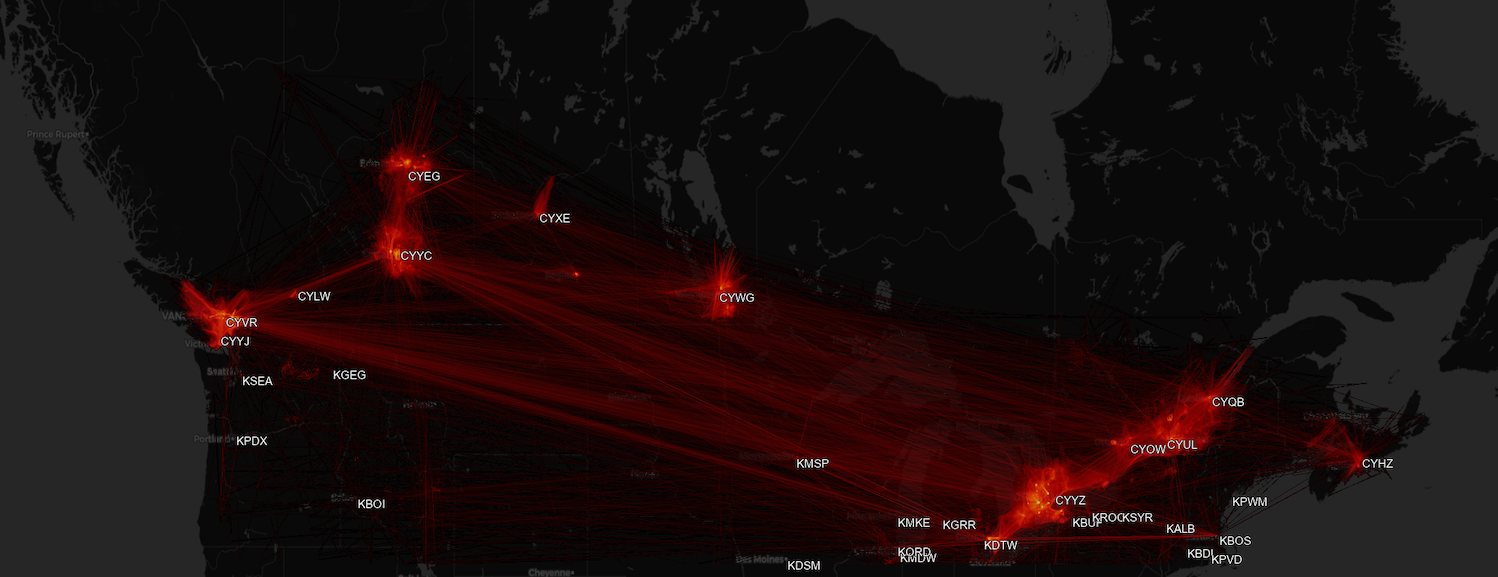
The State of ADS-B in Canada
ADS-B was mandated in the USA by the FAA on January 1, 2020. Within the following airspace:
- Class A, B, and C
- Above 10,000′ MSL (with some exceptions)
- Within Mode C transponder airspace.
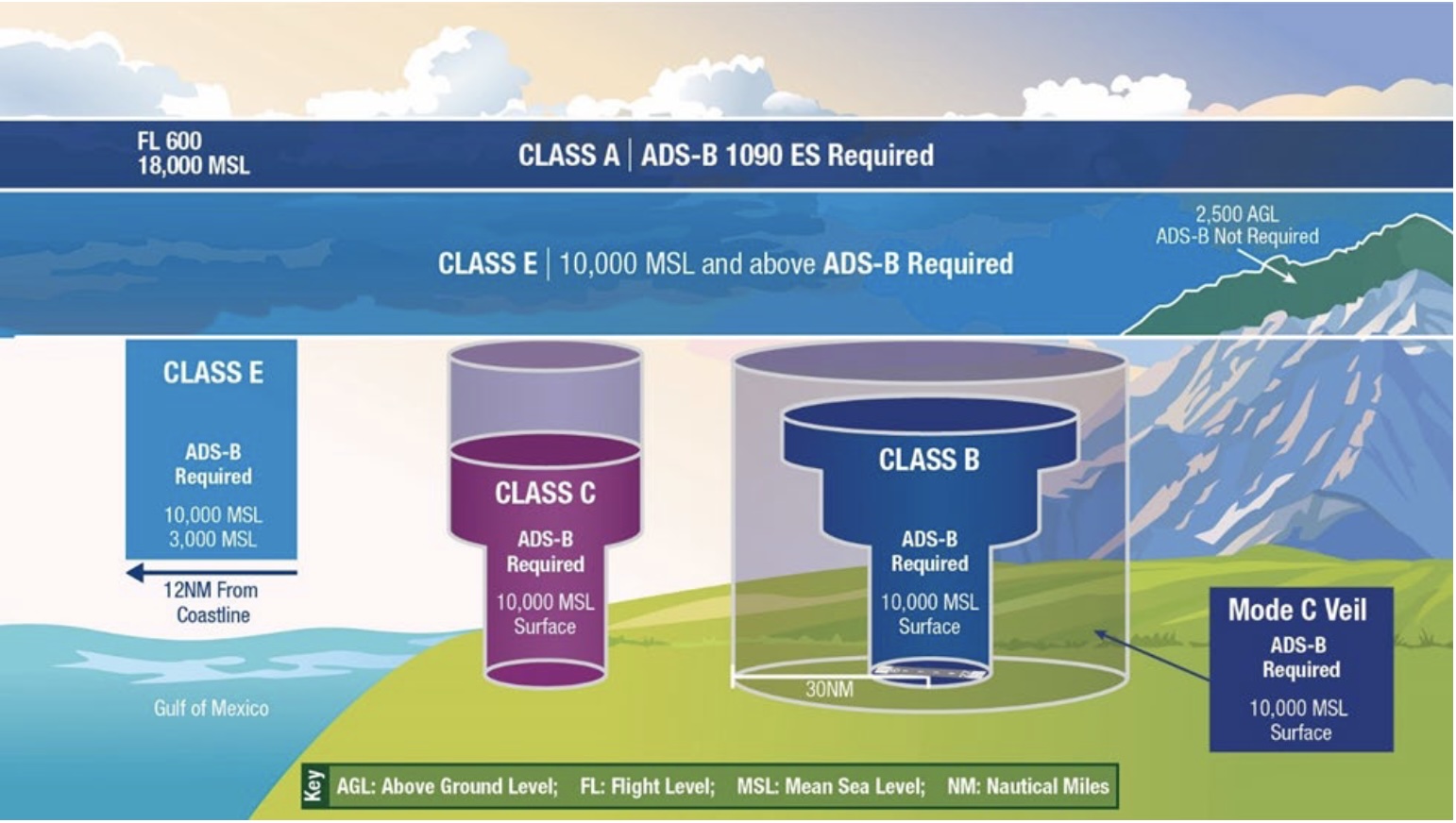
This applies to any aircraft in the United States airspace, regardless of registration. This effectively means that Canadian aircraft flying along the USA/Canada border cannot enter US airspace unless they have an ADS-B transponder.
The FAA was able to institute this mandate with relative ease because of the fact they have the majority of the USA already covered with ground based receivers that can be outfitted to read ADS-B data from airplanes.
Nav Canada, on the other hand, decided to want to provide coverage to the entire country using space based receivers (ie, satellites). What this means is that Canadian aircraft owners would need to install an ADS-B antenna on the top of their aircraft to send signals to the Iridium constellation of satellites to be ADS-B compliant in Canada.
Called “antenna diversity”, owners would effectively need to have an antenna on both the bottom and top of their aircraft to fly in Canada and the USA. At great expense. Because of this, NavCanada has had a more conservative timeline when mandating ADS-B in Canadian Airspace.
- February 23, 2023: Class A airspace
- May 16, 20224: Class B airspace
- Tenatively 2029: Class C,D,and E airspace.
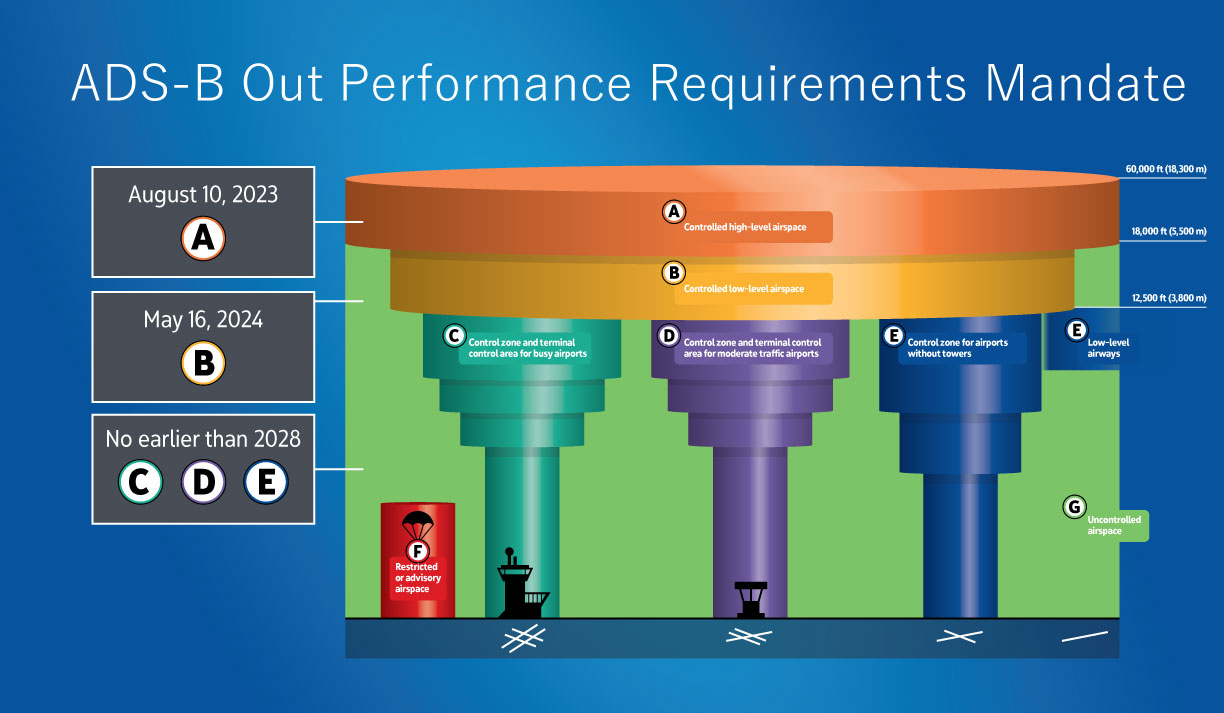
General aviation pilots and owners normally fly in C,D, and E airspace, so this date will affect us the most.
However, some aircraft owners (my self included) have elected to equip their aircraft with downward facing ADS-B antennas to be able to fly into the United States. My personal strategy is to hope that I will just be able to retrofit my aircraft with antenna diversity at a more cost effective price in the future from equipment manufacturers.
So the question arises, just what is the current state of ADS-B in Canada. How many aircraft are flying in Canadian Domestic airspace with ADS-B out capability? And the ones that don’t have ADS-B, what type of flying are they doing?
To answer these questions. I spent the past few weeks pouring over a years worth of data to produce this report. I’ll leave any conclusions up to the reader.
Methodology
This analysis examines the transmission behaviour of Canadian-registered aircraft using historic ADS-B telemetry data.
Telemetry data analyzed in this study spans from December 31, 2024 through February 28, 2026 (UTC), covering 425 consecutive days.
Data was present for all 425 days within the study window, with no detected multi-day gaps in telemetry collection.
This continuity reduces the likelihood that observed behavioural patterns are artifacts of short-term sampling or incomplete temporal coverage.
All transmission classifications and activity metrics reflect aircraft observed during this defined 425-day period.
The dataset consists of recorded position messages collected during the study period from a crowd-sourced ADS-B receiver network. Records include the Mode S 24-bit aircraft address (commonly referred to as the ICAO hex code), registration, timestamp, position, and message source type (e.g., ADS-B, ADS-R, MLAT, Mode S, or TIS-B).
Aircraft registrations were matched to the Transport Canada Civil Aircraft Register using the Mode S 24-bit address and registration mark. Owner information was joined using the corresponding registry files.
Aircraft were classified based on observed transmission behaviour within the dataset:
ADS-B observed: At least one position message where data_source was either adsb (direct ADS-B reception) or adsr (ADS-B Rebroadcast). While adsb represents direct reception of an aircraft’s ADS-B transmission, adsr represents ground rebroadcast of ADS-B traffic. ADS-R exists in environments where multiple ADS-B link types (1090ES and 978 MHz UAT) are in use and traffic is rebroadcast between them. In both cases, the aircraft must be transmitting ADS-B Out.
MLAT-only: At least one position message where data_source = ‘mlat’ and zero position messages where data_source was adsb or adsr.
Mode S-only: At least one position message where data_source = ‘modes’ and zero position messages where data_source was adsb, adsr, or mlat.
TIS-B-only: At least one position message where data_source = ’tisb’ and zero position messages where data_source was adsb, adsr, or mlat.
Unobserved: Present in the registry but not observed in the telemetry dataset during the study period.
Aircraft classified as MLAT-only, Mode S-only, or TIS-B-only were not observed transmitting ADS-B during the study period. This classification reflects observed transmission behaviour rather than confirmed equipage status.
For activity comparisons, a “flight day” was defined as any distinct UTC calendar day on which at least one position message was observed for a given aircraft. This definition was chosen for simplicity and reproducibility.
All classification decisions are based solely on observed transmission data within the dataset.
Scope of the Analysis
This study evaluates ADS-B transmission behaviour among aircraft that were:
- Active during the study period, and
- Observable within the geographic footprint of the receiver network.
The analysis does not attempt to measure regulatory compliance or declared equipage status. It evaluates only what was observed in the data.
Limitations
Several factors limit the interpretation of these results.
Receiver Coverage
The ADS-B dataset is derived from a crowd-sourced receiver network with uneven geographic coverage. Remote regions and low-traffic areas may be underrepresented. Aircraft operating at low altitudes or in sparsely covered areas may not be consistently observed.
Signal Path vs. Equipage
This analysis classifies aircraft based on observed transmission behaviour. Absence of observed ADS-B messages does not definitively indicate lack of ADS-B equipment. Factors such as antenna performance, installation configuration, intermittent operation, or coverage geometry may influence whether transmissions were detected.
Similarly, ADS-R represents ground rebroadcast of ADS-B transmissions. While grouped with direct ADS-B observations, its presence reflects signal distribution rather than a distinct transmission type.
Activity Bias
Aircraft not flown during the study period are not represented in the telemetry dataset. As a result, the analysis reflects active aircraft observable within the study window rather than the full registry population.
MLAT and TIS-B Interpretation
MLAT positions are derived from Mode S transponder replies using multilateration. TIS-B positions are ground-generated rebroadcasts of surveillance targets. Neither classification alone confirms the presence or absence of ADS-B Out equipment; they describe how the aircraft was observed within the network.
Registry Matching Assumptions
Matching between telemetry data and registry records assumes accurate Mode S 24-bit address assignment and up-to-date registry information. Registration changes, data entry discrepancies, or lag in registry updates may introduce minor classification error.
A small number of aircraft were observed flying after recorded administrative cancellation or without matching registry history records. These cases likely reflect timing differences, mark changes, export events, or incomplete historical records rather than operational anomalies.
Time Window Effects
The study reflects behaviour within a defined time period. Seasonal operations, maintenance intervals, or temporary configuration changes may influence observed transmission patterns.
Interpretation
This analysis should be understood as an observational study of transmission behaviour within a defined dataset and timeframe. It provides insight into how aircraft were observed transmitting during the study period, rather than a definitive census of national ADS-B equipage.
Overall Observability
This analysis begins by examining how much of the Canadian registry was visible in the telemetry dataset during the study period.
The Canadian Civil Aircraft Register contained 34,933 aircraft at the time of analysis. Within the study window, 8,094 unique aircraft were observed transmitting at least one position message in the dataset. Of these, 7,625 aircraft were successfully matched to the active registry snapshot using registration mark.
This means approximately 23% of the registry was observed during the study period.
Absence from the dataset does not imply inactivity or lack of equipage. It reflects aircraft that were both operational and visible to the receiver network during the study window.
Among registry-matched aircraft that were observed:
- 6,921 aircraft (90.8%) were observed transmitting ADS-B (including ADS-R) at least once.
- 704 aircraft (9.2%) were observed only via MLAT, Mode S, or TIS-B.
When unmatched aircraft are included, 451 of the 469 unmatched aircraft were also observed transmitting ADS-B.
These figures describe observed transmission behaviour within the dataset. They do not represent a certification audit or regulatory compliance assessment.
Behaviour by Aircraft Category
Transmission behaviour varies significantly by aircraft category.
| Type | Registered | Observed | ADS-B | No ADS-B |
|---|---|---|---|---|
| Aeroplane | 30639 | 6645 | 6185 | 460 |
| Helicopter | 2930 | 857 | 700 | 157 |
| Glider | 670 | 92 | 25 | 67 |
| Balloon | 500 | 0 | 0 | 0 |
| Gyroplane | 193 | 31 | 11 | 20 |
Aeroplanes account for the majority of observed aircraft and show the highest ADS-B observation rate. Helicopters display a lower observed ADS-B rate, and gliders and gyroplanes exhibit the lowest rates within the dataset.
This variation likely reflects differences in operational environments, altitude profiles, equipment installation patterns, and mission types rather than simple equipage presence or absence.
Because this analysis measures observed transmission rather than certified installation, results should be interpreted as behavioural patterns within the study window.
Behaviour by Aircraft Age
Among observed aircraft, ADS-B transmission rates remain above 85% across nearly all age cohorts, including aircraft over 50 years old. The highest rates are observed among the newest aircraft (0–9 years), while mid-age cohorts (10–29 years) show slightly lower transmission rates.
| Age Range | Observed Aircraft | ADS-B Out Aircraft | ADS-B Rate Among Observed (%) |
|---|---|---|---|
| 0–9 | 1,269 | 1,224 | 96.5% |
| 10–19 | 1,364 | 1,210 | 88.7% |
| 20–29 | 1,302 | 1,132 | 86.9% |
| 30–39 | 574 | 527 | 91.8% |
| 40–49 | 1,202 | 1,092 | 90.8% |
| 50–59 | 1,241 | 1,127 | 90.8% |
| 60–69 | 430 | 399 | 92.8% |
| 70–79 | 140 | 122 | 87.1% |
| 80–89 | 61 | 48 | 78.7% |
Behaviour by Fleet Category
Fleet-level analysis reveals meaningful variation in ADS-B transmission rates across operational categories.
| Fleet Category | Observed Aircraft | ADS-B Out Aircraft | ADS-B Out Rate (%) |
|---|---|---|---|
| Private Individual | 2,814 | 2,548 | 90.5% |
| Other/Uncategorized | 2,464 | 2,256 | 91.6% |
| Airline / Charter | 1,309 | 1,263 | 96.5% |
| Helicopter Operator | 811 | 658 | 81.1% |
| Training / Education | 326 | 258 | 79.1% |
| Business Aviation | 152 | 152 | 100.0% |
| Leasing / Holdco | 137 | 130 | 94.9% |
| Aerial Firefighting / Forestry | 62 | 62 | 100.0% |
| Survey / Imaging | 45 | 37 | 82.2% |
| MedEvac / Health | 33 | 33 | 100.0% |
| Test / Defence Contractor | 33 | 33 | 100.0% |
| Police / Public Safety | 31 | 26 | 83.9% |
| Resource / Utility | 22 | 21 | 95.5% |
| Maintenance / MRO | 16 | 13 | 81.3% |
Large fixed-wing commercial operators — including Airline/Charter, Business Aviation, Aerial Firefighting, MedEvac, and Defence contractors — show near-universal ADS-B observation within the study period. Business Aviation and specialized commercial operators reach 100% observation among aircraft detected in the dataset.
In contrast, rotorcraft operators and training fleets exhibit materially lower ADS-B observation rates. Helicopter operators show an 81.1% rate, while Training/Education fleets show 79.1%. These lower rates may reflect operational environments such as low-altitude operations, remote areas with limited ground receiver coverage, legacy equipage, or mission-specific transponder usage patterns.
Private individuals represent the largest observed segment, with a 90.5% ADS-B observation rate — suggesting strong equipage penetration across the general aviation fixed-wing fleet.
Operational Behaviour: Flight Training Fleets
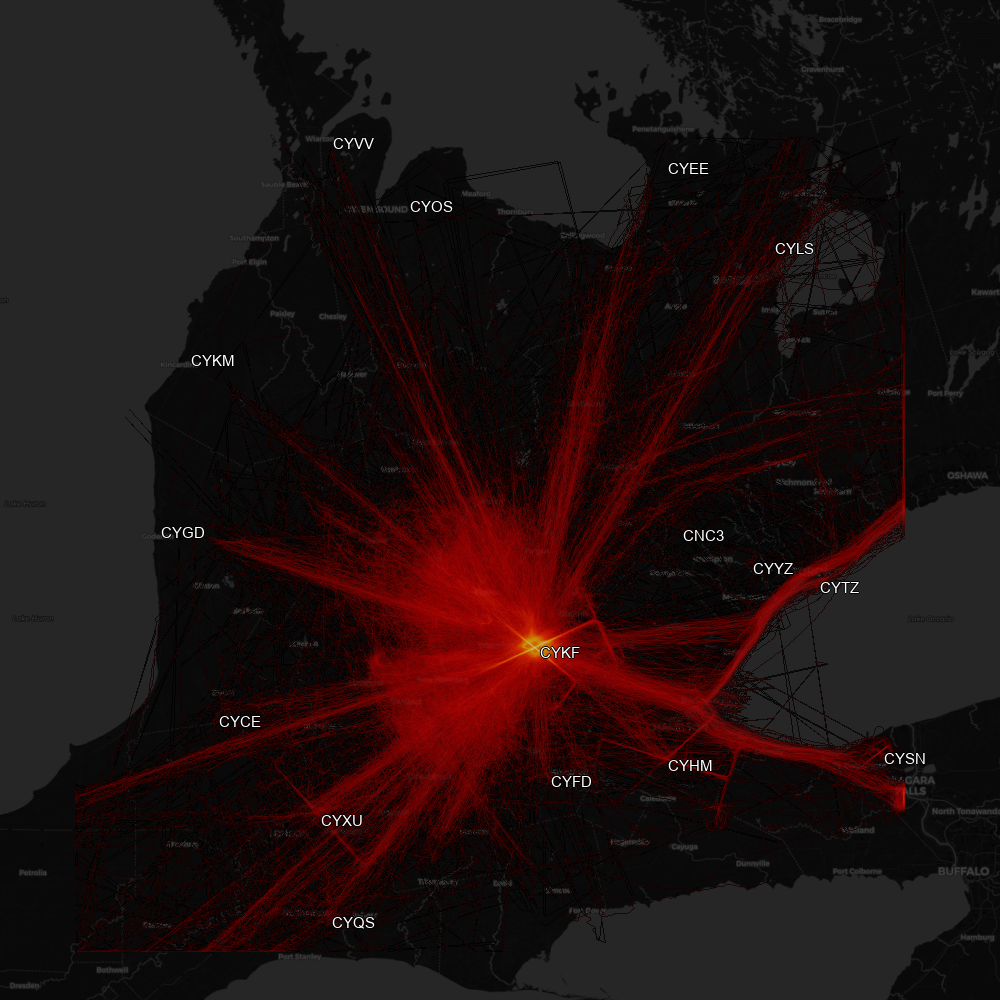
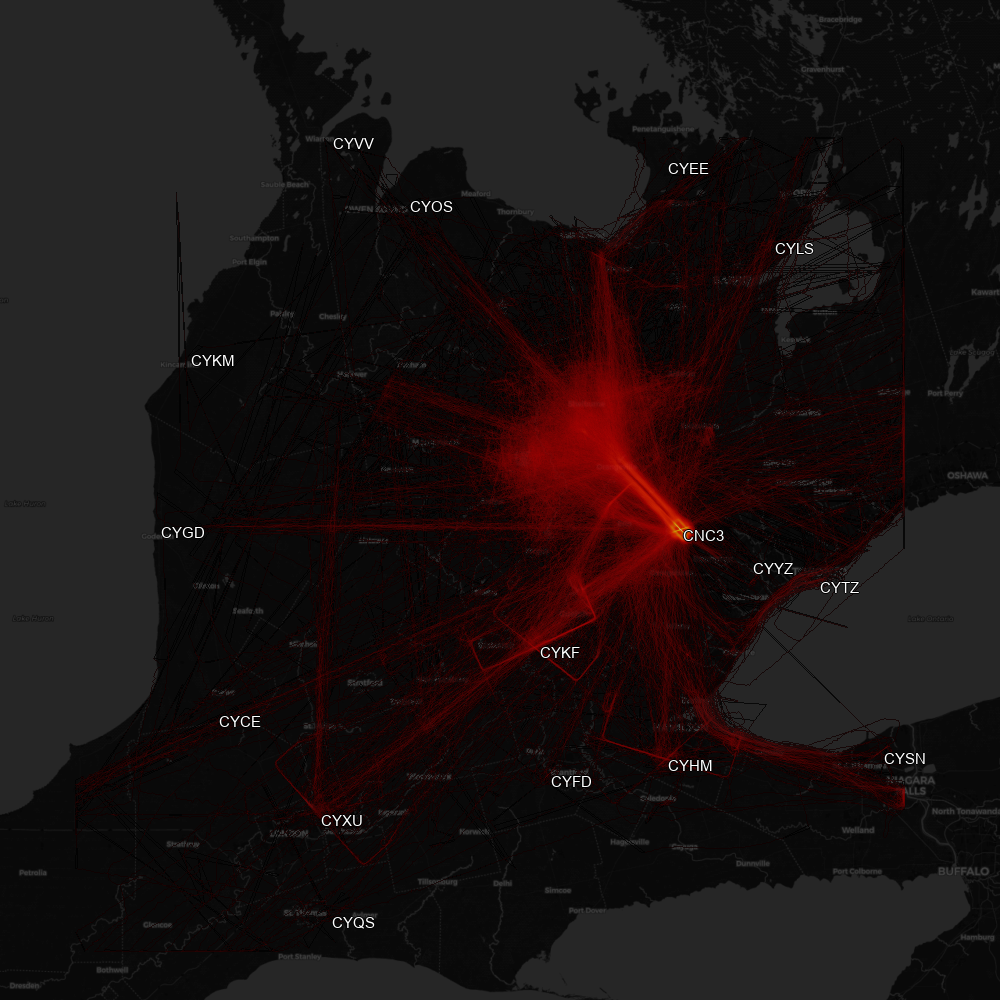
Heatmap analysis of several large flight training operators with observed non-ADS-B aircraft reveals highly structured local activity patterns.
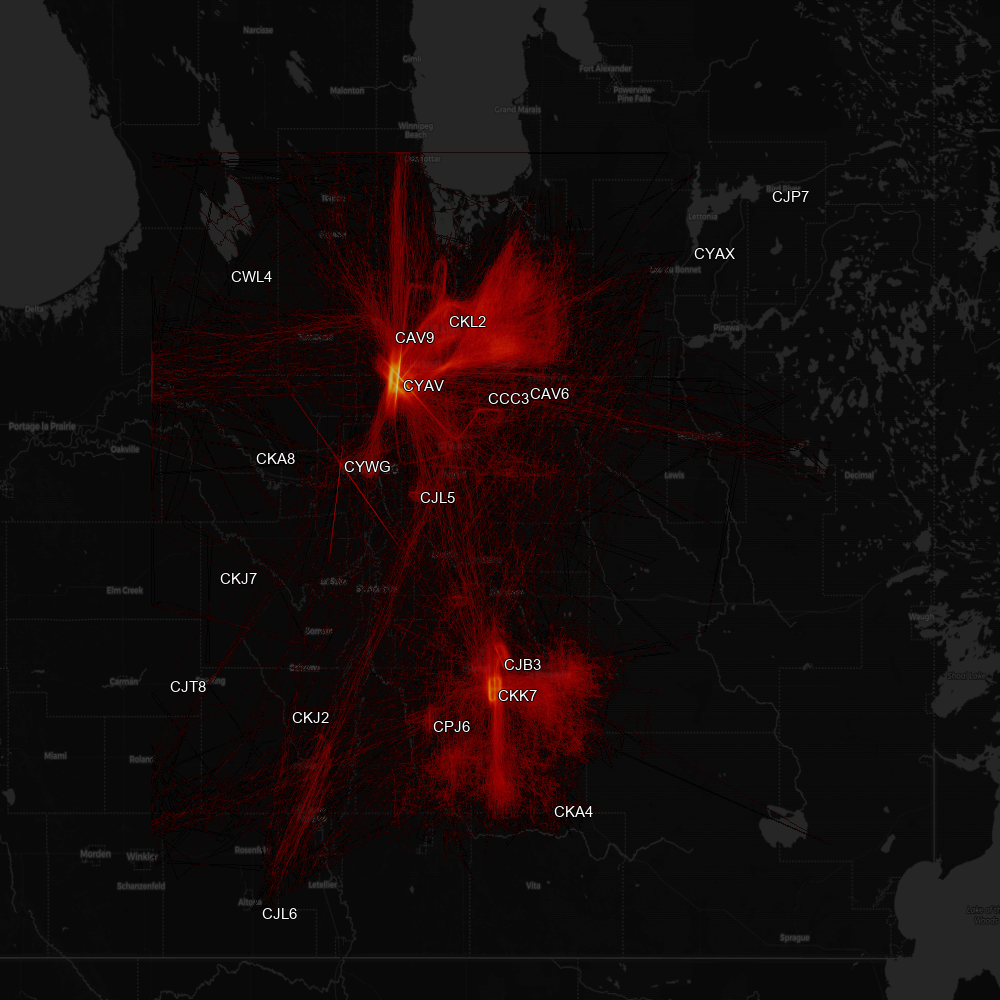
These fleets predominantly operate:
• Within defined training areas
• At low to moderate altitudes
• On short-duration sorties
• With high-frequency circuit repetition, usually clustered around their home base.
Operational Behaviour: Public Resource & Survey Aviation
Aircraft operated by provincial resource agencies that did not exhibit ADS-B transmissions within the study window display structured, grid-based flight patterns consistent with aerial survey and environmental monitoring missions. These operations differ materially from transport or training activity, with repetitive linear track lines and defined geographic coverage blocks indicative of systematic data acquisition.
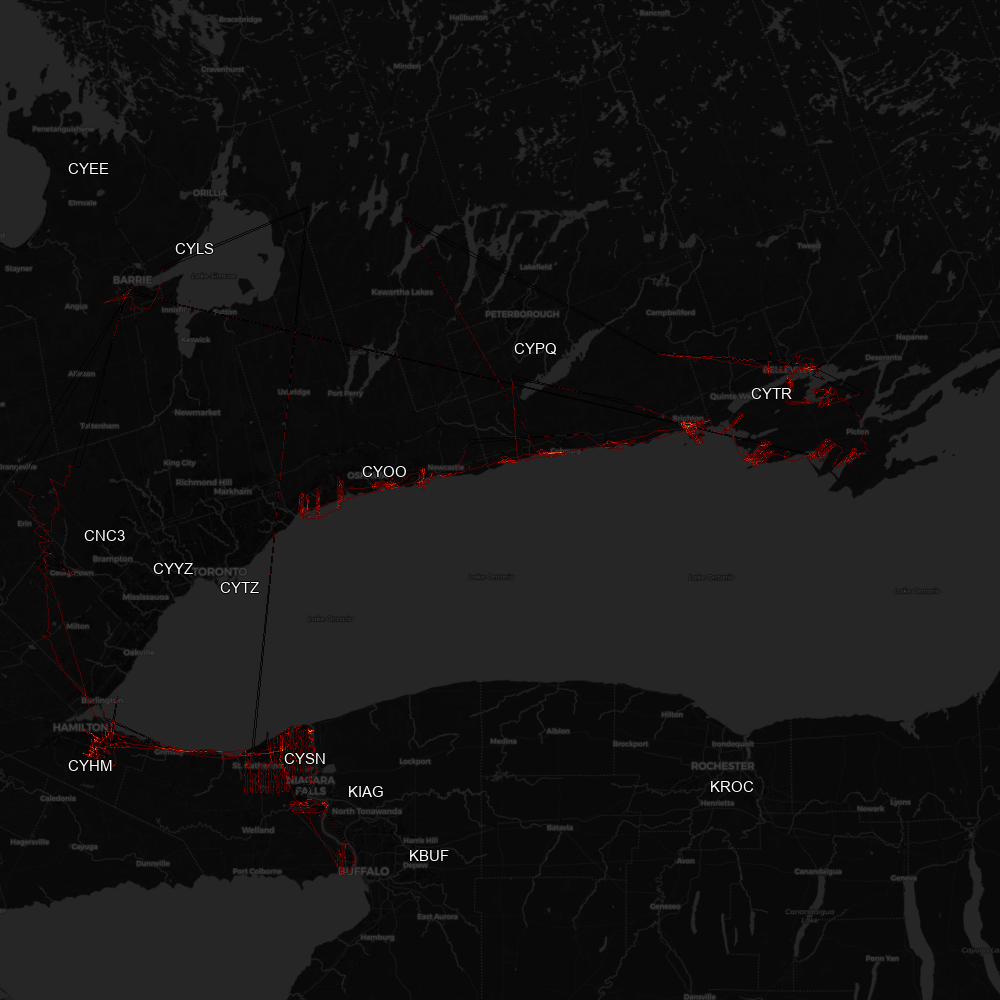
The mission-driven nature of these flights highlights the diversity of operational behaviours within the Canadian fleet and reinforces the importance of interpreting ADS-B observation rates in the context of operator type and mission profile rather than as a uniform behavioural signal.
Geographic Distribution of ADS-B Observation
Provincial analysis reveals relatively consistent ADS-B observation rates across Canada’s major aviation regions. Most large provinces cluster between 88% and 93%, suggesting broadly similar equipage penetration and transmission behaviour nationwide.
| Province / Territory | Observed Aircraft | ADS-B Out Aircraft | ADS-B Out Rate (%) |
|---|---|---|---|
| Ontario | 2,419 | 2,135 | 88.3% |
| Alberta | 1,473 | 1,369 | 92.9% |
| Quebec | 1,297 | 1,194 | 92.1% |
| British Columbia | 1,137 | 1,021 | 89.8% |
| Manitoba | 450 | 418 | 92.9% |
| Saskatchewan | 295 | 278 | 94.2% |
| Nova Scotia | 159 | 156 | 98.1% |
| New Brunswick | 94 | 78 | 83.0% |
| Newfoundland and Labrador | 85 | 76 | 89.4% |
| Northwest Territories | 74 | 62 | 83.8% |
| Yukon | 47 | 47 | 100.0% |
| Prince Edward Island | 15 | 15 | 100.0% |
| Nunavut | 7 | 7 | 100.0% |
Ontario shows the largest observed fleet and a slightly lower ADS-B rate at 88.3%. This likely reflects fleet composition effects — Ontario has a higher concentration of private general aviation aircraft, training fleets, and rotary-wing operators, all of which show lower ADS-B transmission rates compared to commercial fixed-wing operators.
Prairie provinces perform strongly. Saskatchewan (94.2%) and Alberta (92.9%) demonstrate high observation rates, consistent with fleets that skew toward commercial, resource, and IFR-heavy operations.
Quebec (92.1%) and Manitoba (92.9%) align closely with this pattern, indicating no major geographic gap in ADS-B adoption among observed aircraft.
British Columbia (89.8%) tracks slightly below the prairie provinces, potentially reflecting higher helicopter activity and coastal/low-altitude operations.
Northern territories and smaller provinces show very high percentages, but these figures are influenced by small sample sizes and should be interpreted cautiously.
Overall, the data suggests that geographic location alone does not dramatically alter ADS-B transmission behaviour. Differences between provinces appear more strongly driven by fleet composition, particularly the relative presence of commercial fixed-wing operators versus helicopter and training fleets.
Activity Intensity and ADS-B Transmission Behaviour
To better understand whether ADS-B transmission correlates with operational frequency, aircraft were grouped by the number of distinct flight days observed during the study window.
| Flight Activity | Observed Aircraft | ADS-B Aircraft | ADS-B Rate |
|---|---|---|---|
| 1 day | 313 | 245 | 78.3% |
| 2–5 days | 668 | 507 | 75.9% |
| 6–20 days | 1,644 | 1,440 | 87.6% |
| 20+ days | 5,469 | 5,180 | 94.7% |
ADS-B transmission rates increase significantly with operational frequency.
Aircraft observed on only one or a handful of flight days show ADS-B rates in the mid-70% range. In contrast, aircraft observed on more than 20 flight days show a transmission rate of 94.7%.
This gradient strongly supports the earlier fleet-level findings:
Highly active aircraft: which are more likely to be commercial, professional, or operationally critical, demonstrate near-universal ADS-B transmission behaviour.
Lower-activity aircraft: more likely to represent occasional private flights, seasonal operations, training activity, or legacy fleets — show greater variability in observed transmission.
This suggests that ADS-B behaviour is closely linked to operational intensity and mission profile.
In Summary
This analysis provides a snapshot of how ADS-B is currently being observed across the Canadian aircraft fleet using real telemetry data.
Across more than 425 days of historical observations, approximately 21.8% of aircraft in the Canadian registry were observed transmitting telemetry, and roughly 90.8% of those observed aircraft exhibited ADS-B transmissions. Within the population of aircraft that are active and visible to receivers, ADS-B appears to be the dominant surveillance method.
However, the analysis also highlights important differences between operator types. Airline, charter, and business aviation fleets show near-universal ADS-B presence, reflecting operational requirements and international airspace access. In contrast, flight training fleets, helicopter operators, and certain specialized mission aircraft show lower observed ADS-B rates. These differences appear to be driven more by operational profile than by simple adoption lag.
Geography and mission type also play a role. Survey operations, aerial resource monitoring, and environmental mapping flights display structured flight patterns that differ substantially from transport or training activity. These operational behaviours illustrate the diversity of missions conducted by Canadian aircraft and reinforce why ADS-B observation rates must be interpreted in context.
It is also important to recognize the limits of observational telemetry analysis. Receiver coverage, aircraft altitude, mission profiles, and the characteristics of individual surveillance networks all influence what can be observed. As a result, the presence or absence of ADS-B signals in this dataset should not be interpreted as confirmation of equipment compliance or regulatory status.
What this analysis does provide is a data-driven view of how aircraft are actually being observed in the airspace system today. As Canada continues the phased implementation of ADS-B requirements, these patterns will likely evolve. Repeating this analysis in the coming years may provide an interesting way to measure how equipage and operational behaviour change over time.